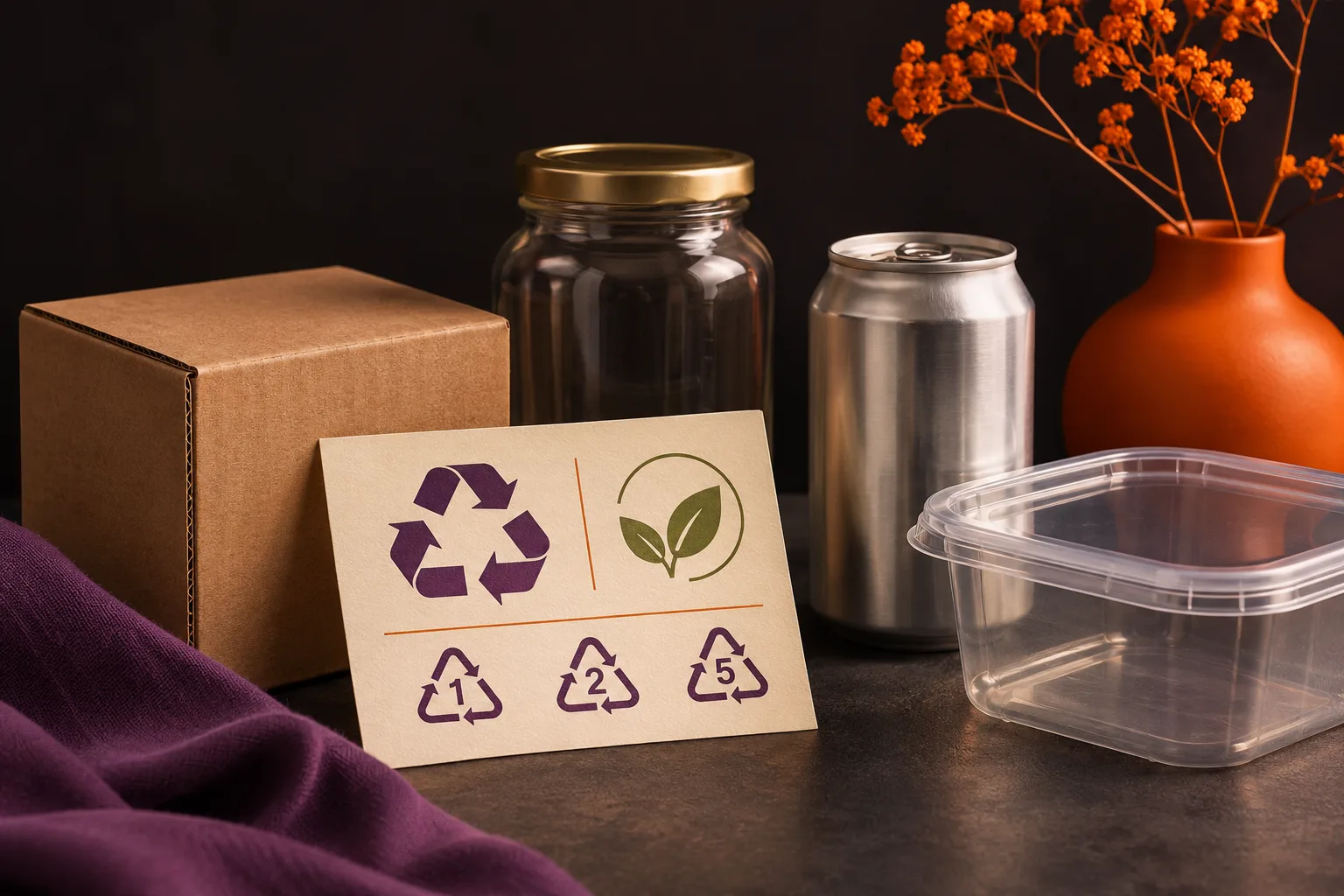
Three arrows and a number identify a material
The small triangle stamped into a plastic container is easy to read as “put this in recycling.” That is not what the number promises. ASTM International’s current resin-identification standard says the code exists to identify the plastic resin used in an article. It also says the code is not a recycle code and does not show that a collection or processing system exists for that item. [1]
The U.S. Environmental Protection Agency makes the same practical distinction: the number can help identify the plastic, but it does not necessarily mean your community accepts the item. Shape and condition matter too. A program may accept bottles and jugs made from a resin while rejecting bags, foam, utensils or other objects made from a similar plastic. [2]
“Recyclable” describes a system, not just a material
Federal Trade Commission guidance says an item should not be marketed as recyclable unless an established program can collect, separate or otherwise recover it for reuse or manufacturing. The guidance also accounts for access. An unqualified recyclable claim is appropriate when suitable facilities are available to at least 60 percent of the consumers or communities where the item is sold. With less access, the claim should explain that recycling may be limited or unavailable. [3]
This is why a national package label cannot replace local instructions. The material may be technically processable somewhere, yet your curbside program may not collect that format. Food residue, mixed materials, flexible films, very small pieces and certain shapes can also prevent an item from moving through a real sorting system.
The local list is the deciding list
Stafford’s residential recycling page currently lists newsprint, magazines, PE and HDPE plastic, glass containers, aluminum cans, tin cans and cardboard among accepted materials. The city’s recycling handout gives a more useful shape-based list: plastic bottles, tubs, jugs and jars; glass bottles and jars; metal cans; and paper, cartons and cardboard. It instructs residents to empty and rinse containers, flatten cardboard and place items loose in the cart rather than bagged. [6][7]
The same handout excludes plastic bags and wrap, Styrofoam, disposable cups, food-soiled items, batteries and plastics numbered 3, 4, 6 and 7 from the curbside cart. A symbol on one of those items does not override the collection rule. City guidance and the collector’s latest instructions should win whenever a package and the local list disagree.
Compostable does not mean recyclable
FTC guidance says a compostable claim should be backed by reliable evidence that every material in the item will safely become usable compost in about the same time as the materials around it. If the item is suitable only for a municipal or industrial facility, the claim should say so. The claim also needs qualification when suitable facilities are not available to a substantial majority of the intended market. [4]
That distinction matters at the bin. EPA says compostable plastic is not intended for the conventional recycling stream and can disrupt it. “Compostable” can mean home compostable, commercially compostable, or acceptable only in a specific program. Look for the actual setting and certification information instead of treating a leaf icon as universal permission. If no compatible collection or drop-off option exists, placing the item in recycling does not create one.
Biodegradable needs a place and a time
Almost any claim about breakdown is incomplete without conditions. FTC guidance says an unqualified degradable or biodegradable claim for an item entering the solid-waste stream should be supported by evidence that the entire item will completely break down and return to nature within one year after customary disposal. It explains that landfill, incineration and recycling environments generally do not provide those conditions. [5]
“Made from plants,” “bio-based” and “biodegradable” also answer different questions. One describes feedstock, another describes a claimed breakdown behavior, and neither automatically tells a recycling facility how to process the item. The disposal instruction is the part that turns a broad environmental phrase into something actionable.
A 60-second disposal check
- Name the item: bottle, tub, film, foam and mixed-material pouch may follow different rules even when their plastics look alike.
- Read beyond the number: a resin code identifies material; it does not guarantee curbside acceptance.
- Check the scope: determine whether a claim applies to the product, package, cap, label or only one component.
- Match the system: recycling, home composting and commercial composting are separate destinations.
- Prepare it correctly: follow local directions for emptying, rinsing, flattening and keeping recyclables loose.
- Use the current local list: collection rules can be narrower than a package’s broad national claim.
The most dependable question is not “Does this have a green symbol?” It is “Does the program that serves this address accept this exact item, in this condition?” That one habit turns a vague packaging claim into a practical disposal decision.
Sources & editorial notes
Reviewed November 13, 2026. Collection rules and environmental-marketing guidance can change. Check the current City of Stafford and service-provider instructions before setting materials out.
- ASTM D7611/D7611M-26: resin identification coding
- U.S. EPA: How Do I Recycle Common Recyclables?
- eCFR, 16 CFR § 260.12: recyclable claims
- eCFR, 16 CFR § 260.7: compostable claims
- eCFR, 16 CFR § 260.8: degradable claims
- City of Stafford: residential solid waste and recycling
- City of Stafford and GFL: acceptable recycling items