A “dead” device can still start a fire
When a small electronic device stops working, the easiest instinct is to toss it in the trash or recycling bin. Lithium-ion batteries make both choices risky. The U.S. Environmental Protection Agency says lithium-ion batteries and devices containing them should go to a separate battery-recycling or household-hazardous-waste collection point—not into household garbage or municipal recycling. [1]
The problem often appears after collection. Trash compactors, sorting equipment and transportation can crush or puncture a battery. A damaged cell can heat rapidly, ignite nearby material and create a fire in a truck, transfer station, landfill or recycling facility. The familiar chasing-arrows symbol on a battery means it may be recyclable through a specialized program; it does not mean it belongs in a curbside bin. [2]
Some devices combine two waste hazards
EPA’s guidance for individuals specifically addresses e-cigarettes because they combine a lithium battery with nicotine residue. The agency says these devices should not go in household trash or recycling: damaged batteries can cause fires, while nicotine can expose workers and enter the environment. EPA directs individuals to a household hazardous waste collection site. [1]
That does not mean every local program accepts every device in the same way. Collection rules can differ, so confirm acceptance with the facility before making the trip—especially for a leaking, swollen, hot or otherwise damaged item.
Prepare ordinary batteries and devices for transport
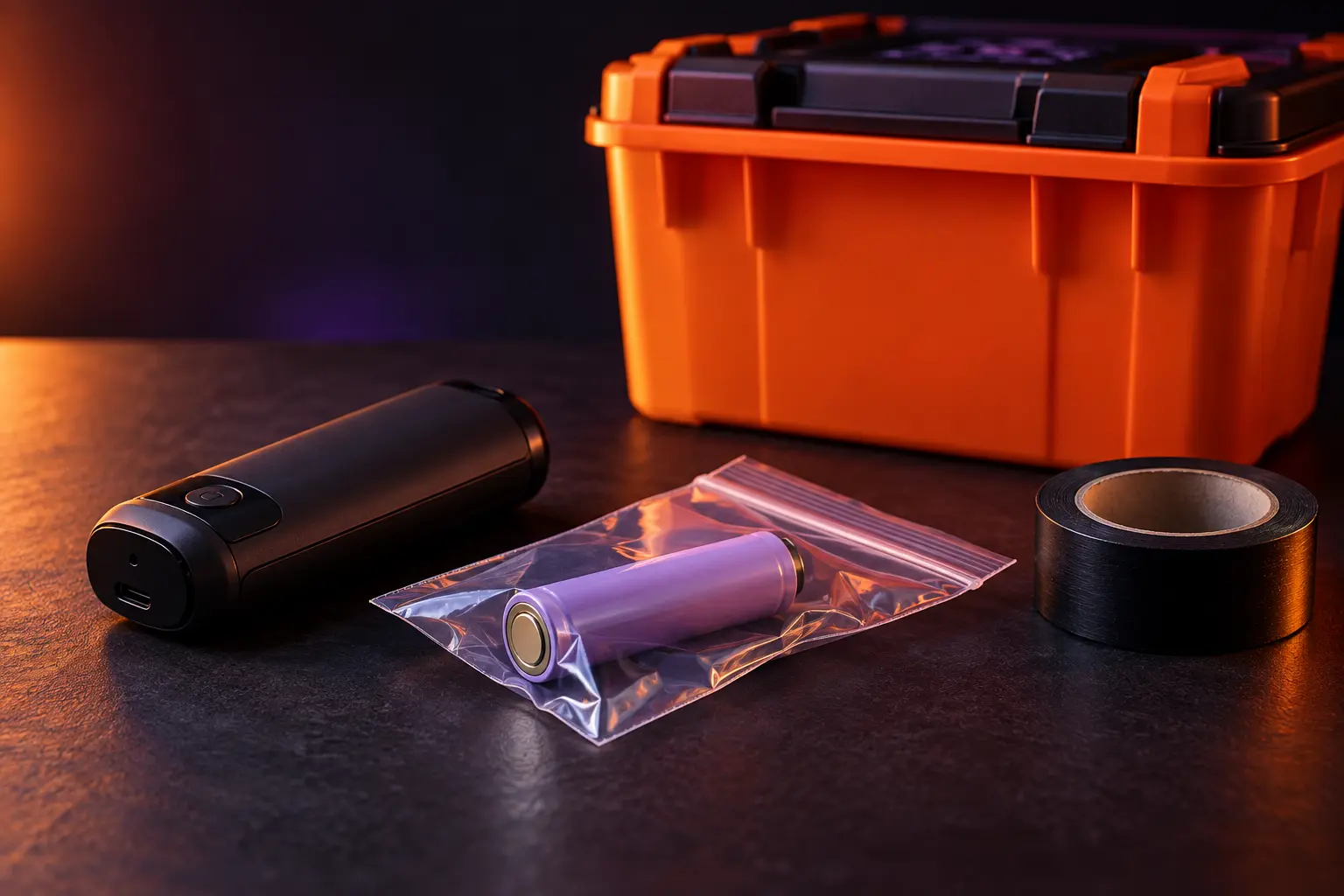
For an intact removable lithium-ion battery, EPA recommends covering exposed terminals with non-conductive tape, such as electrical tape, or placing each battery in its own plastic bag. That prevents the terminals from touching metal or another battery and short-circuiting. A device with an embedded battery can also be placed in its own bag for transport. [2]
Do not pry apart a product just to reach a battery that was not designed for easy removal. EPA’s 2026 collection guidance warns that trying to pull out an embedded battery can itself cause a fire. Keep the item away from heat, water and direct sun while you arrange proper disposal. [3]
A damaged battery needs extra caution
Stop using a lithium-battery device if you notice excessive heat, swelling, leaking, an unusual odor, discoloration or odd noises. The U.S. Fire Administration lists those as warning signs and advises keeping lithium-ion batteries out of trash and direct sunlight or hot cars. [4]
Do not mail, transport or place a visibly damaged battery into a routine collection box without instructions. Contact the local household hazardous waste program and describe the condition first. If a device is actively smoking, sparking or burning, move away, call 911 and follow emergency instructions rather than trying to package it yourself.
A Fort Bend County starting point
The Fort Bend County Recycling Center and Household Hazardous Waste facility serves county residents at 1200 Blume Road in Rosenberg. Its current accepted-materials page lists batteries other than alkaline batteries, and its main page says the center is for residential use only—not business, commercial or agricultural waste. [5] [6]
The county page lists regular hours of 8:00 a.m.–4:00 p.m. Monday, Tuesday and Thursday through Saturday, with closures on Wednesdays and holidays. Because the published list does not specifically name every type of battery-containing device, call 281-633-7581 before visiting to confirm that the facility accepts the exact item and its condition. Check the county page again for holiday closures and current instructions.
A 60-second disposal checklist
- Do not bin it: keep lithium-battery devices out of household trash.
- Do not curbside-recycle it: ordinary sorting systems are not designed for loose batteries.
- Check the condition: heat, swelling, leaking, odor or noise requires extra caution.
- Do not force it apart: leave embedded batteries in place.
- Isolate terminals: tape exposed contacts or bag intact removable batteries separately.
- Confirm first: ask the collection facility about the exact device and its condition.
A device can be out of power and still contain stored energy. Keeping it out of ordinary trash and recycling protects collection workers, equipment and the local waste stream.
Sources & editorial notes
Reviewed October 30, 2026. Facility hours and accepted materials can change. Confirm current instructions directly with Fort Bend County before traveling. This article is general safety information and does not replace emergency instructions or facility-specific requirements.
- U.S. EPA: How to Safely Dispose of E-Cigarettes — Information for Individuals
- U.S. EPA: Frequent Questions on Lithium-Ion Batteries
- U.S. EPA: Battery Collection Tip Sheet for E-Cigarettes, 2026
- U.S. Fire Administration: Battery Fire Safety
- Fort Bend County: Recycling Center and Household Hazardous Waste
- Fort Bend County: Accepted Material and Fees